Wednesday, 15 June 2011
Our Father - Part II
Sunday, 8 May 2011
Our Father - The story of a God who didn't believe in himself.

‘God is Dead; but given the way of men, there may still be caves for thousands of years in which his shadow will be shown. And we — we still have to vanquish his shadow, too.’
- Friedrich Nietzsche
Yahweh
In the time before time, before the seas were filled and the mountains rose to touch the sky; before the sky even, there was born unto the heavens a race of Gods. Few among them knew where they themselves came from, but they had been around for a long time; perhaps forever – not even they knew. Such a trivial human concept as time did not concern them, anyhow; they were content just to be. As gods do, they had, by human standards, infinite powers and were capable of the power of creation. That was their crowning achievement, their greatest skill – the power to breathe life where is none. Each God carefully crafted the world of his own creation and watched as it bloomed millennium after millennium. Like gardeners tending to their allotments they watched and coaxed life into action.
Yahweh wasn’t like the other gods. It was clear to his mother and father and all of his older siblings that he wasn’t the same as them. He lacked the foresight that his elders had, and of all the Gods in the kingdom of heaven (his own father included) considered him to be an upstart. He was quick to temper and was rarely given any responsibility because of his recklessness. His older brother, who had, like his father and his father before him, been entrusted with the power of creation used to tease him about his shortcomings, telling him that he could never amount to anything. The power of creation was a right reserved only for those who had shown their maturity, and Yahweh was still not deemed worthy.
But rather than contain his temper and recklessness and further his maturity, deprivation of the power of creation only frustrated Yahweh further. He would watch as the elders boasted their fine creations – beautiful, thriving, harmonious worlds which they tended to with great care and attention. How he longed to care for a world of his own, how he longed to do what he was intended to do.
His mother saw the sadness in her son’s eyes and decided to take pity on him, so she called him to her side and said: ‘My son, you are young and you still have much to learn, however it is your right as one of us, that you should be trusted with the power of creation as was your father and his father before. May you use your gift wisely an may it bring you happiness and maturity.’
And so it was that Yahweh, much to the disapproving disgruntlement of his father and others amongst the elders of the Gods, was given the gift of creation.
Creation
And so Yahweh thanked his mother for the pity she had shown him, and went to create his new world.
First he created the earth. It was a dark, vast pool without form. Then he commanded through the darkness: ‘Let there be light!’
And there was light. Yahweh saw the light and he separated it from the darkness. He called the light day and the dark night. And so the darkness came – and so too came the light. This was the first day - and it was good.
On the second day, he commanded that there should be something to divide the water, and so the water split in two, with a body of air in the middle. He called this the sky.
Then he commanded: ‘Let the waters under heaven be gathered together unto one place and let the dry land appear!’
And it was so. Yahweh called the land earth and the water seas. And it was good.
And Yahweh looked down upon his newly created earth and said, 'Let the land produce seed-bearing plants and fruit-bearing trees of every kind.’ And it was so. From the barren earth shot up thousands of plants and trees all over the planet. Yahweh saw the fruits of his work – and it was good. This was the third day.
On the fourth day, he created lights in the sky to separate night from day. These would be the markers of the seasons, years and days. He created the sun to warm the days and the moon and stars to mark the coming of night.
Yahweh observed his new world with pride: the flowing oceans, the sky full of burning trophies of his work, and the land, rich with fruit and seed bearing plants. It was good, but still incomplete.
On the fifth day, Yahweh called out across the land: 'Let the waters swarm with living creatures, and let birds fly above the earth across the sky.' And it was so. All over this new land, animals of all kinds sprung up and took their lives. The seas filled with fish and other sea creatures, the sky filled with birds and other winged beasts taking flight for the very first time, and the land bore cattle and insects and all the other wild creatures of the land.
He looked down upon the new beasts of the world and saw that it was good, before calling out to them: ‘Be fruitful and multiply! Fill the seas, land and sky alike!’
On the sixth day, Yahweh crated someone to watch over these beasts. From the clay in the ground, he moulded a creation in his own image – Man, into which he breathed the gift of life through his nostrils. The man took his first breath and sprang to life before Yahweh’s eyes. He saw the man – and it was good. Then he said unto him: ‘Rule over the fish of the sea, the birds of the air, and every creature that moves on the ground. I give you every seed-bearing plant and every fruit-bearing tree on the face of the earth to be yours for food. And to all the animals of the earth, all the birds of the air, and to all the creatures that move on the ground, I give every green plant for food.’
Yahweh looked down upon his completed work. It was good. He was so proud; he could not wait to show his mother and father.
He was pleased with his works, and on the seventh day he rested.
Venus
His wife replied that it was essential that they trust him, and that ‘He can only begin to grow if we allow him to spread his wings – he has to be given responsibilities. He is still young-’
‘He’s irresponsible,’ he snapped back. ‘He’s irresponsible, quick to temper, and he has no foresight. You should never have trusted him with creation. Not yet at least.’
‘He has to learn-’
‘Never before in the whole kingdom has there been a child like him.’
Suddenly, Thoah - one of Jupiter’s archangels, came striding in and bowed before his superiors. ‘My Lord,’ he said, addressing Jupiter. ‘Venus seeks an audience with you. He is waiting outside.’
‘Send him in,’ replied Jupiter, nodding towards the angel.
‘Venus?’ said Hera, Yahweh’s mother. ‘He’s one of Yahweh’s angels… what news has he?’
‘I called for him.’
‘You called for him…? What have you planned…?’
Moments later, a beautiful angel with flowing blond hair and a face like lightning came striding in towards Jupiter.
‘Venus!’ said Jupiter to the angel.
‘My Lord,’ said Venus bowing at the feet of his superior. ‘You sent for me?’
‘I did. You are assigned to my son, Yahweh, are you not?’
‘I am indeed,’ replied Venus.
‘How do you find him?’ asked Jupiter, ‘as a master?’
Venus rose to his feet and stood two steps back, his head still bowed in reverence to this elder of the Gods who had invited him to his audience. ‘He has always been good to me and my angels. He was very glad to be granted the power of creation.’
‘This lack of power,’ interrupted Yahweh’s mother, ‘it frustrated him in the past?’
Venus hesitated before replying. ‘Yes,’ he said at last.
‘Did he speak to you about it?’ asked Jupiter.
‘On occasion. I believe he felt somehow inadequate before he was granted this power. He felt as though his peers had little faith in him. After a while he began to lose faith in himself.’
‘And you,’ said Jupiter, ‘do you have faith in him?’
Venus hesitated. ‘He is my master,’ he eventually replied. ‘I have faith in any God – and when all is said and done he is no different. It is not my place to judge any God, my lord; I am but an angel – a slave to your grace – Yahweh’s worth will be proved by his works, and not by words of mine.’
‘You are a loyal servant,’ said Yahweh’s mother.
Venus bowed in appreciation.
‘I have a job for you, Venus,’ said Jupiter. ‘I wish to test the strength of my son’s creation, to see if he has created a world fit to be inhabited.’
‘And what is my task?’
‘You will go down to this place Yahweh has created – you will find the Garden of Eden - that is the paradise that Yahweh has given to this 'Man' of his, and you will give his 'Man' a choice.’
Wednesday, 23 March 2011
Love and Wrath Part II - The Valley of the Shadow of Death
The other side – somewhere over the rainbow.
Religion has an inherent interest in death. But then, I suppose, don’t we all? It is something we have all thought about - our own death - at one time or another. We all have a burning desire to find out what, if anything lies beyond death. It is the great unknown… the great unanswerable question. What will become of us when we die…?
Well, the likelihood is – nothing. We will rot into the ground and all of our memories and dreams will die with us.
Death plays a major part in religion in many guises. First, there is the concept of death – the idea of heaven and hell, which is used as either a carrot dangled in front of the believer’s face, or a whip at his back, coercing him into doing what his religion believes is right.

The concept of Hell is used expertly in religion as a form of terrorism – terrifying children into following their faith’s moral code. But what, when you think about it, could possibly be the purpose of Hell, aside from installing fear? The bible preaches that God is just and merciful – how, then, can he justify Hell? To begin with, if he is omnipotent and he already knows our fates, why put himself and mankind through the whole terrible rigmarole? It can’t possibly serve any purpose other than perhaps his own enjoyment. Furthermore, a human being has a finite lifetime, and so can only possibly commit a finite number of sins; how then can God justify eternal punishment? The punishment grossly outweighs the sins, even when the sins are committed at their maximum potential. Surely these cannot be the actions of a just God?
And so with a longing for Heaven, or a fear of Hell, a lifetime is wasted - a lifetime that could have been filed with creativity, experience and freedom - not prayer and war and servitude.
"Murder, my dear Watson — refined, cold-blooded murder."
Another prominent way in which death features in religion is murder. For centuries, millennia even, people all over the globe have been slaughtered in the name of religious beliefs. Year after year they kill each other over whose beliefs are correct. Had it not been for the commands of a ‘just’ and ‘loving’ God, there would have been no crusades, there would have been no witch hunts in the middle ages, and there would have been no terrorist attack on New York City on September the eleventh two thousand and one.
All of these atrocities, and thousands upon thousands besides, were all acts of murder committed as a direct result of religion.
And the Winner is… - The biggest killer of all.
JER 13:14 – “And I will dash them one against another, even the fathers and the sons together, saith the LORD: I will not pity, nor spare, nor have mercy, but destroy them.”
But who is the biggest killer in religious history? Well, if, as the Christians profess, the bible is true, then the runaway winner is God himself.

And this is only the instances where the bible states the specific number of people killed – this figure doesn’t include, for instance, the countless murders committed in the great flood, or the killing of the first born in
Okay, I hear you say, but if God doesn’t exist, then what’s the problem, surely these are just stories and have no bearing on reality? Surely it is no more relevant than say, Hannibal Lector’s kill count? Well, perhaps it is just fiction, but God is a role model to millions of people, young and old alike. When he descended as Jesus, he was supposed to be the perfect example, the ‘spotless lamb’ but what kind of role model is a man who has killed 25 million people? God makes Charlie Manson look like Yogi Bear, and it is from this genocidal, vindictive, jealous being that believers are supposed to take their moral guidance from.

Martyrdom
“The only difference between suicide and martyrdom is press coverage”
Chuck Palahniuk
As well as taking the lives of others, for millennia religious believers have been taking their own lives as well, on holy missions with belief in a fast track to heaven. Unfortunately this often involves taking the lives of innocent people along with them, the clearest, most recent examples of this being, of course, the September 11th attacks in New York, and the 7/7 attacks in London.
What could drive a person to commit such terrible acts, and take their own life in the process? The answer lies, of course, in the profound lack of respect for life taught by religious doctrines. For the entirety of their lives Religious followers are taught that there is something much better yet to come – paradise is awaiting them if only they can shake off the shackles of this crappy life here on earth. It’s little wonder these ‘martyrs’ wanted to die if that’s what they believe. And killing sinners along the way – doing ‘God’s work’, apparently qualifies you instantly for a place in heaven.
Killing in the name of
We now live in a world where it is okay to issue death warrants upon a person for doing the simplest of things like writing a book – Salman Rushdie wrote ‘The Satanic Verses’ in1988 and has been living with a fatwā requiring his execution that was proclaimed on Radio Tehran by Ayatollah Ruhollah Khomeini, the spiritual leader of Iran at the time ever since.

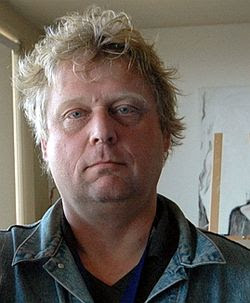
Van Gough had been working on a ten minute film entitled ‘Submission’, which took a critical look at the treatment of women in Islam. A film. The sad truth is, if Mohammed Bouyeri had not been indoctrinated as a child to believe that the fourteen hundred year old ramblings he had been taught were divinely inspired, then he most certainly would not have committed the atrocity he committed.

"I will sweep away everything in all your land," says the LORD. "I will sweep away both people and animals alike. Even the birds of the air and the fish in the sea will die. I will reduce the wicked to heaps of rubble, along with the rest of humanity," says the LORD. "I will crush
(Zephaniah 1:2-6) The Bible (NLT)
“Fight and slay the Pagans wherever you find them…"
God is love.
Sunday, 30 January 2011
The Children of Disobedience - The Problem of Hell
Imagine a world where the biblical concept of Hell is real. When you die, you are damned to a burning pit, cast into a lake of fire for all eternity.
St John told us that 'God is love', that he is compassionate and caring for his creation, but if this is true, how does the concept of Hell fit in to this? Surely if I have led a good life - been kind, charitable and humble I would deserve some reward in heaven? Do I deserve to be punished in the most horrible way possible for all eternity for not taking Sundays off and not accepting a man who lived thousands of years before my birth as my personal Saviour? Even still, if I have committed crimes in my life, surely the punishment is vastly out of proportion? Even if I sinned every minute of every day for my whole life, my life is finite, and so I can only commit a finite number of sins - so how can infinite punishment possibly be the actions of a just God?
So begins The problem of Hell.
This idea was the starting point for my novella 'The Children of Disobedience'. It follows our main character, Thomas, though his death, his journey through the bowels of Hell, and eventually his judgement at the hands of a higher power. This story will form part of a larger collection of stories which deal with the on-going debate about existence of God, which should hopefully be complete by this summer.
Part one of 'The Children of Disobedience' is below - please feel free to comment etc. and keep your eyes on the blog as I will be posting the subsequent parts in the following weeks.
Thanks for reading!

The Children of Disobedience - Part One
‘Let no man deceive you with vain words: for because of these things cometh the wrath of God upon the children of disobedience.’
- Ephesians 5:6
I
When he awoke it was dark – complete, all encompassing blackness. The sky (if it was even still there) was black and the sun had withdrawn. He didn’t feel right. He felt incomplete. As he patted himself down, he was certain that his body was there, but he felt somehow disconnected. The darkness enveloped him, suffocating him as he rose to his feet, waving his arms in front of himself, trying to work out the size of his enclosure. With the use of his eyes robbed from him, his other senses began to work overtime. Somewhere far in the distance he heard a low wail, like a wolf howling on a distant hilltop.
Suddenly, through the darkness there was a glint of light that was barely visible in front of him. As he edged closer, he strained to hear a barely audible whisper that was creeping through the black. Then he saw it again – a fleeting flash of sliver teeth through the vast charcoal emptiness.
‘Who is that?’ he asked, a rush of fear building in the pit of his stomach. ‘Who is that, out in the black? What is this place?’
There was no reply. Just the gentle hissing of incoherent whispering rippling through the air.
‘Show yourself, stranger,’ he pressed. ‘I know you’re there. I can feel you by my side. What is this dark prison? Why can’t I see?’
‘You will see once you are ready to open your eyes.’ The voice that replied was deep and shook him to his innards.
‘Who are you, faceless spectre? Why have you brought me here to this place? What do you intend for me?’
‘You brought yourself here.’ The booming voice spoke again. ‘Every decision you made, every road you travelled – they all brought you here.’
‘What is this pitch black eternity?’
‘It is just that – eternity.’
‘Have I died? Have I crossed over to the other place?’ As soon as those words crossed his lips, colours began to swim into view, and he blinked as a thousand shades of red and grey came bursting in to view. ‘I am beginning to see things… colours.’
‘Then you are ready.’
Slowly the colours began to turn into shapes, and as his eyes began to focus, he saw the world around him as he had never seen it before. Long ridges of blood red rock towered up on either side of him, winding down the sides of a long path that led downwards in to a deep dark unknown world. As he turned around, he saw his companion for the first time – a tall, shadowy cloaked figure who stood by his side, his silver teeth only just visible under his hood.
‘What manner of man are you,’ he asked, ‘that dwells in such an unforgiving place?’
‘I am no man.’
‘Then what are you? If you are not man, are you beast? What hides beneath those robes?’
‘I am neither man nor beast, alive nor dead. I am a member of the jury that will judge mankind.’
‘And me?’ he replied timidly. ‘Am I to be judged?’
‘All shall face judgement at the hands of their creator.’ The stranger’s voice shook him again.
As he looked despairingly towards his feet, he noticed something. On the right hand side of his stomach, there was a seeping crimson bloodstain, and he pulled his hand in, running his fingertips across the wound, and inspecting his stained fingers. Even though he could see and smell his own blood, and he could see the wound that cut deep in to his stomach, he felt no pain. He felt nothing. ‘I remember now,’ he said. ‘I was killed. I was shot in the stomach trying to defend my home. I have died – I have died and come to Satan’s lair.’
The cloaked stranger was silent, and he extended a long ash grey finger from the depths of his flowing cloak and pointed it in front of him, towards the man.
‘Shed your clothes,’ he growled in his deep, terrifying voice.
‘My clothes? But why?’
‘They serve no purpose in this place. Are you so ashamed of the man you are when you are stripped of your robes that you will not shed them? That was the sign of the very first disobedience.’
‘No man likes to be stripped of his clothes – exposed for all to see.’
‘Have you anything to hide?’ growled the stranger.
‘We all have our private shames.’
‘And they will be exposed. There will be no more secrets now. All that was hidden will be uncovered – every secret sin will be exposed. No man will hide from the truth in this place.’
And so he began to strip himself of his clothes, leaving them in a pile on the rocks next to where he stood.
‘Now you are unmasked,’ growled the stranger. ‘And all shall see the man that you really are.’
He stood naked and exposed before the stranger, still hiding his shame as best he could with his trembling hands. ‘What now? What is your intention, stranger?’
The cloaked stranger turned and slowly began to walk down the path in to the unknown. ‘Follow me.’
Slowly he began to follow his new companion, timidly trying to see past the long crimson ridges into the place to which they were heading. ‘What lies down that road?’ he piped quietly.
Suddenly the stranger stopped and turned around where he stood.
‘A dark place.’
* * * *
Some way down the path, he began to hear a noise coming from the dark distance. Long, low wails were drifting over the blood red crevasses and echoing through the thick, grey air. ‘Tell me stranger,’ he said, ‘what is that terrifying sound?’
‘That is the sound of darkness.’
‘Are we going into the darkness?’
‘Perhaps. But not now.’
And so they walked on in silence, listening to the hideous wailing that rose up from the distance. They followed the path down through the winding vein that was cut into the rock until they reached an opening, where the path widened and wound downwards towards a blood red river.
‘Is this the place I think it is?’ he asked timidly.
‘Where do you think we are?’ replied the stranger, looking straight ahead and continuing to move steadily.
‘Is this eternal damnation? Is this the place that was foretold in the holy books?’
The stranger stopped suddenly and glanced up for only a moment towards the endless grey clouds that hung overhead. ‘When Venus and his angels fell,’ he said, ‘this pit opened up to receive them.’
‘Have I fallen as they did?’
The stranger began to walk slowly again. ‘The pit isn’t closed. It remains open to beckon any man who does not watch his footsteps.’
‘So the holy texts were true.’
‘What reason have you to doubt the word of god?’
~
Soon they reached the bank of the red river, and as it gushed and swirled at his feet, he noticed something. Someway down the river, moored at its bank, sat a huge ship bobbing up and down with the river’s flow; its lifeless grey sails disappearing into the fog.
‘What is that ship in the distance?’ he asked.
‘That is the vessel that will guide you toward your final destination. Here is where you will wait for an audience with Venus.’
As he walked, two or three feet behind his companion towards the ship, he pointed towards the river. ‘The water,’ he asked, ‘why is it that colour?’
‘Because it isn’t water,’ growled his companion. ‘It is the blood and waste of the lost souls.’
Thirty feet or so from the ship, he noticed something on the riverbank. It was a man; he was gurgling in the black mud, grasping with all of his strength at the rocks by the river’s side, trying to pull himself up. The man was trying to speak – but he uttered only single, broken, incoherent words.
He jumped towards the riverbank and extended his hand towards the man. ‘Take my hand!’ he shouted. ‘I’ll help you out.’ He reached and reached but he could not make contact with the man.
The cloaked stranger watched from his side. ‘You cannot help him.’
‘I nearly have his hand!’
‘No one can save him. Not now; not for the rest of eternity. Only he could have done that. Leave the slothful glutton to his works.’
Still he tried to save the man, but each time he reached out his arm, he seemed to get further away. Finally, he realised that the stranger was right… he could not save him, so he gave up and left the man as he was instructed.
The stranger stopped as they began to walk up the gangplank towards the ship, and looked down at the man on the river bank. ‘He has found his fate,’ he said. ‘And it is a fate worthy of his sins. He decided upon a life of gluttony, now he must lie by the river bank for eternity and feast on rats and toads and snakes. He has found his fate just as you will find yours.’
Soon they reached the top of the gangplank and he looked out to see thousands of faces standing on the deck. They were crammed up as tightly as they could be packed. Thousands of fear stricken faces stared back at him and his companion, and the sound of weeping and wailing hit his ears like the crash of a cymbal.
‘Who are these wretched souls?’ he asked, his eyes and mouth hanging wide.
‘They are lost,’ growled the stranger, straining to be heard over horrifying wails. ‘They are seeking direction – and this is where they will find it.’
‘Tell me stranger… why are they so afraid?’
‘Why are you not?’
The cloaked stranger turned towards him and growled under his breath. ‘This is where we will part ways. You will wait aboard this ship until you are called – then we shall decide your final destination.’
‘But what shall I do until then? How long will it be until I am called? Tomorrow? Next week? In ten years time? You cannot leave me stranger!’
But his hooded companion had already begun to walk back down towards shore.
‘You will be called,’ he growled behind him.
Monday, 10 January 2011
Brothers - An Introduction
The poem follows two brothers, one theist and one atheist, who die and must weigh up the sins they have committed in their lifetimes. Please feel free to comment (positive or negative!). Let me know what you think about the issue - I'm always up for a debate!
Enjoy
If the poem is not below, you can find a link to it on the right hand side.